Tag Archives: grad school

Intermission, ft. #DefendCville and Other Distressing Incidents

I last wrote right before the world imploded– my world, anyway.

While I was writing my last blog post, white supremacists were likely holed away somewhere in Charlottesville, preparing for the “surprise” pre-rally march that they held through my alma mater later that very night.

I went to bed early that night, thinking only of the journals that I had yet to grade and the presentations I would have to watch the next day…whether or not the focus group I was advising would be as fabulous I knew they could be.

I had no idea.

When I woke up the next morning, it was a morning like any other. I smiled at my dog and pulled my phone toward me and did my pre-morning-walk glance through my phone to check my notifications.

It only took a few scrolls down twitter before I was sitting up straight in my bed, frantically scrolling to see if I could find an explanation for the pictures and videos of white supremacists carrying torches through the campus where I had once lived–where I had called home. 

I spent the morning numb with rage. I was angry. I was afraid for my friends, and as I was getting ready for Keio, I texted everyone I knew who was in Charlottesville and made sure everyone was okay. I texted my friends who weren’t there but who attend/attended UVA to make sure they were okay. Everyone was fine– the kind of ‘fine’ that meant nothing had sunk in yet. The kind of ‘fine’ that meant you were turning the situation over and over in your mind but nothing was computing.

It felt impossible.

And to anyone out there who wants to immediately chime in to say, “But of course it was possible! This ain’t new!” I agree, but I also feel compelled to say that it was the feeling that was impossible. I study race. Well, I study literature and African-American history and culture. I know this was not only extraordinarily possible, but somewhat probable, I would even say, given Charlottesville’s long history of slavery and more recent history of growing tension in the community and amongst Black students.

But it felt impossible.

It felt impossible that people I knew from school, my friends, people I considered my family were close enough to people who, given the opportunity, would gladly hurt them, to take clear photos and videos. It felt impossible that they had invaded the residential space of where one of my best friends was going to be calling home– the Lawn. She moved into her room the next day. It felt like living in a dystopian novel that suddenly my Twitter feed was filled with articles on major news cites and magazines by people I knew, was friends with, or knew of through other friends– giving their first hand accounts of what we need to call a terrorist attack.

The war I had been theoretically battling in suddenly attacked close to home– literally.

I saw my friends who had been like me, theoretical and protest driven, advocates and teachers, suddenly become foot soldiers in a war that a large part of America refuses to acknowledge.

Despite the turmoil, I had to go to work Saturday morning. I couldn’t hide in bed or jump in my car and drive to Charlottesville. All I could do was put on an all black outfit and prepare myself to either verbally attack or educate– as the only Black person in the program, if I’m being honest with myself, I was mostly preparing to attack.

There is much I regret from that Saturday. I regret not asking to be the one to explain what had happened in Charlottesville to the Keio students– I wanted them to see the impact something like that had on a personal level, as a Black person, as a Black woman, as a UVA alumna with friends still in school and strong ties there. I regret holding a hand while tears were shed over the Holocaust, while my Black friends were in the kind of urgent, immediate danger that I had never understood before that moment. I regret letting the conversation be dictated by the white response, by white feminism, by people who wanted to talk about the anti-semitic components. My regret was not that we talked through that lens, but that I didn’t insist that this was a conversation that needed to have Black people, Black experiences and Black responses in it. I didn’t feel like I was allowed to express my pain. I let people talk over me, because their experiences were clearly more important than my own; I let several people cry and rage to me; but I didn’t do the intellectual work in the moment that I had always insisted I would do– in theory.

I’m the type of person that claims to be the protector of the underdog, the verbal attacker, the one who “takes-no-shit,” and yet in that moment I didn’t do what I told myself I had been doing all along. I didn’t speak up. I didn’t make anyone hear me.

Even when I took a small group of the Japanese students with me to the Charlottesville vigil in Williamsburg, I continued to allow myself to be talked over, my silence sealing my complicity with ideas I did not quite agree with.

I was angry at myself for not getting angry with the people who deserved it.

The only thing that got me through that day were small moments: a text from a friend saying he was okay; the assistant director of Keio taking a break to stand outside with me, just standing together, watching a video of the counter protests, but also just standing in silence; one of my students coming up to me to ask if she could “go to Charlottesville,” after taking group pictures, as a way to ask if she and some other students could accompany me to the vigil.

The small moments were what got me through the rest of the trip. I stayed so wound up about Charlottesville that I couldn’t bear to talk to anyone who wasn’t talking about it. I couldn’t sit still during conversations about make-up or music or Donald Trump. I spent whatever free time I had reading articles about Charlottesville and looking at pictures of the rallies on my phone. The first thing I did when the trip went to D.C. was find a friend from UVa who I could talk to and the floodgates finally opened. No one around me seemed to get that something inside of me had ripped and I was bleeding, and I was carrying around that pain while still trying to function as a leader.

The end of Keio passed in haze for me. There were certainly moments that broke through the haze and pulled me back to Earth: taking the students to the Japanese embassy, visiting the National Museum of African-American History and Culture for the first time, meeting up with my long-time friend Jared, touring the Air and Space Museum with two of my students and being dorks together, and the end of the program talent show, which turned into quite the spectacle at the end. (I think there’s a video somewhere on the internet of me dancing and singing to Taylor Swift songs.) Sad as I was for the students to go, I was relieved to be able to crawl back to my parents’ to vent to them, cry, and pet my dog.

Keio ended almost 10 days ago, but I still haven’t got my feet back under me yet. I’ve not really been doing much, even though I should be editing the Masters thesis draft that my advisor sent back to me and getting ready for classes, which start Wednesday. I still don’t feel right, to be honest. It’s partially exhaustion, partially mental and emotional distress, partially other mental illness related issues. I’m not quite ready to deal with people. I’m not ready to move on to other topics. I’m still dealing with the one at hand.

At the very least, the start of the semester means I’ll be back to regularly scheduled Black Girl Does Grad School posts, every Sunday. I’m really glad I thought to create a space over a year ago where I could decompress about things happening in grad school and in life, particularly, when no one else is listening. It’s been a useful exercise and also a huge contributing factor to my sanity. (I mean, let’s not be too strict in defining sanity…but anyway…)


So, until next week, when we embark on my next adventure– year 2.


BONUS MATERIAL!

If you made it this far, thanks for reading! I just wanted to also quickly mention that after my fun little archive visit, it turns out that someone at VCU wrote a blog post about me, my work and my blog! It was super flattering so I just thought I’d share the link in case you felt so inclined as to check it out.
Intermission, ft. Note taking: Tools and techniques

I was chatting with a friend yesterday (hi, Micah) when I had the idea to write a post about my favorite note taking tools since arriving in graduate school. The idea came about as Micah was asking for advice for starting her thesis, so I told her what every professor and grad student I’ve ever met told me: write everything down.

It seems basic, but truly, the Academy is a world where you spin out your most intricate ideas. An idea you had on the bourgeoisie 20 years ago might be just what you need to round out that pesky paper you’ve been fighting on protest music for the last 14 months. If you have a system of documenting your ideas, you can go back to them at any time.

So, first things first, it’s worth thinking about whether you’ll do your note taking analog or digital— handwritten or digitally.

STRATEGY: HANDWRITTEN NOTES

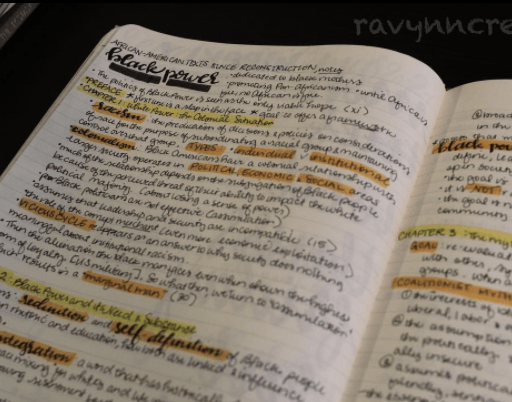
Anyone that knows anything about me knows that I go nowhere without a physical book, (several) pens, and at least one notebook or planner. The process of writing things down with pen and paper is one of the most calming experiences I know, so naturally I use this method for note taking in class and for my readings. My thought process is that if I’m going to hand write everything, I may as well make it pretty, so I splurge on my journals and pens for the semester.

61zn83rqltlScreen Shot 2017-07-23 at 9.33.39 AM

TOOL OF THE TRADE

Up until this summer, I’ve stood firm on my love for Moleskine journals. I started using them in my second year of college and never turned back. Because I had a pretty established and functional note taking routine from undergrad, I didn’t change very much. I love the polished look of a hard back Moleskine– I label them and stick them on my bookshelf at the end of the semester like they were any other book I purchased. I’ve never run out of pages, I seem to just make it to the end of the semester in them, which brings me to another strategy…

STRATEGY: USE ONE JOURNAL FOR YOUR ENTIRE SEMESTER OF CLASSES

Okay, I definitely see how this one could be controversial. When we think about school, we’re trained to think about buying a separate binder and notebook for every subject. It helps us focus and dedicate our energy to one thing at a time, but one thing I noticed as I took more rigorous classes at UVA was that I tended to take fewer notes. The more rigorous the class, the more they tend to be built around ideas and themes, rather than a list of facts that you learn by rote memorization, especially in the humanities. I used to take 4 or 5 pages of notes per class in undergrad, whereas now, I’m lucky if I fill an entire page in my journal during one class in grad school at times. Fewer notes and a less pressing need to write down everything means you’re less likely to fill an entire notebook for each class, so I consolidate.

TIP: SO WHAT ARE YOU TAKING NOTES ON THEN?

Screen Shot 2017-07-23 at 10.35.31 AM

I think everyone will make the mistake of reading more than you need to and taking more notes that you need to until you finally get into the rhythm of what types of notes and information you’re looking for that will be useful for you.

In class: When discussing a book or an article in class, particularly if it will be relevant to me or my work at some point, I always make sure to write anything down that will put me closer to figuring out what the main project or argument of the book/article is. I write down particularly compelling arguments that my classmates put forth, important clarifications that my professors make on the book’s arguments, and anything on the author’s biases that would have impacted how and why they wrote their project. Unfamiliar terms are always nice to jot down, as well as any questions you asked that you got a particularly good answer to. I also like to write down any random thoughts that come to me while I’m thinking about the books, because often the ideas that get batted around the table like a high speed Wimbledon match are the ones that become paper topics down the line.

While reading: Take good notes on the introduction, paying special attention to the main argument and any key terms the author may introduce, then make sure you get the gist of the chapters that follow. Make it your goal to see if the author convincingly, persuasively and adequately argues their main idea in their chapters, noting passages or points that add to their argument or detract from it.

TRICK: SO HOW DO YOU ORGANIZE ALL YOUR CLASSES IN ONE NOTEBOOK?

img_1124-2

There is, my friends, a glorious wonderful thing called bulletjournaling. Essentially it’s a DIY planner/to do list/diary hybrid. It’s made for people who are extraordinarily type A but also enjoy adding a little creativity to their day-to-day life, especially when they otherwise wouldn’t be able to do. (So, me…) For my grad school bullet journal, I lean most heavily on the planner/to-do list aspect of the journal. I begin my journal with a calendar of the months of the semester, and go ahead and plug in any important dates based on the syllabi I receive. From there, I just go week by week. I start by creating a spread like you see above: on the left, I write down all of the readings I’m supposed to do for each class. At the bottom of the page, I do a tentative reading schedule, where I break down the big books into chapters, and space out my readings so I’m not overwhelmed and trying to read 3 articles before class. On the right, I like to keep an overview of my week, plug in classes, appointments, meetings, so I can see what time I might have free during the week to finish any of the assignments that didn’t get done in the designated time.

Tip: I know this seems almost a little too structured, but there’s a lot of flexibility built into this system. When I give myself three academic tasks to finish during the course of the day, I never say when during the day I’ll do it. It doesn’t matter whether I do it at 6 AM or 11 PM at night, as long as I get it done at some point during the day, it’s productive time well spent.

Tip: I also never berate myself for not doing everything on my to do list. Some days I don’t feel like doing what I listed, so I pick to do items from other days. Sometimes I get really into a book and read the whole thing instead of breaking it up over a couple days, but then I don’t do the other items on my list. Somedays, I’m not up to doing much so I do all the easy tasks and some days I don’t feel like doing anything at all. Be firm in your decision to manage your time, but flexible in ways you manage it.

During the week, I just take notes for my classes as I go. The one big seminar a week per class structure lends itself well to organizing– you have notes from class in the same order pretty much every week. Then as I’m nearing the end of the semester, I might color code my notes for even easier access by either assigning each class and schedule page a different post it note color and marking them all like that, or I might use the same strategy with just a regular marker.

For all this organizing and color coding, it’s worth having a few types of pens/markers at your disposal…

TOOLS OF THE TRADE

41yraylfgel-_sy300_76831

Who doesn’t have a pen preference? For me, my preference often changes based on what type of paper I’m writing on. (Seriously, pens write differently on various types of paper.)

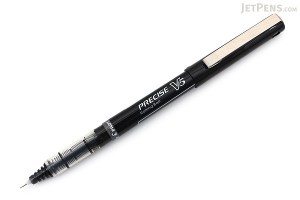
For the first few years of my Moleskine usage, nothing looked better in my journals that Staedtler black fineliners. I still very much enjoy using them today, but I find I enjoy writing with Pilot Precise v5 pens. The pilot pen is totally different– it has free flowing ink which doesn’t dry almost immediately like the Staedtlers and it’s a little more difficult to grip, but I find they don’t run out as fast as the Staedtlers. The first two weeks of use with the Staedtlers are perfect– until the felt tip starts to bend out of shape or fray or run out of ink. I would consistently go through two or three packs of those a semester, while I’ve used the same two or three pilot pens for the same length of time. The Pilots aren’t perfect but I also haven’t found a brand I like more than them at the moment.

41qtm5tivhl-_sx355_

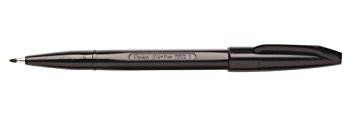
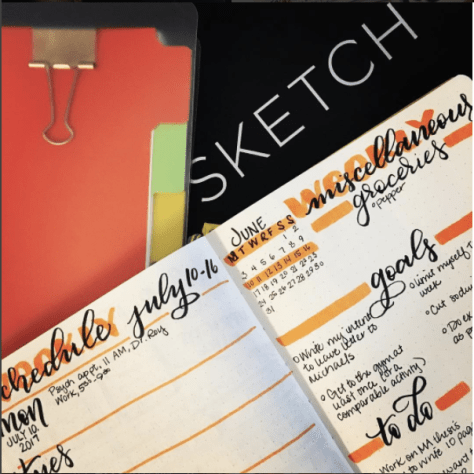
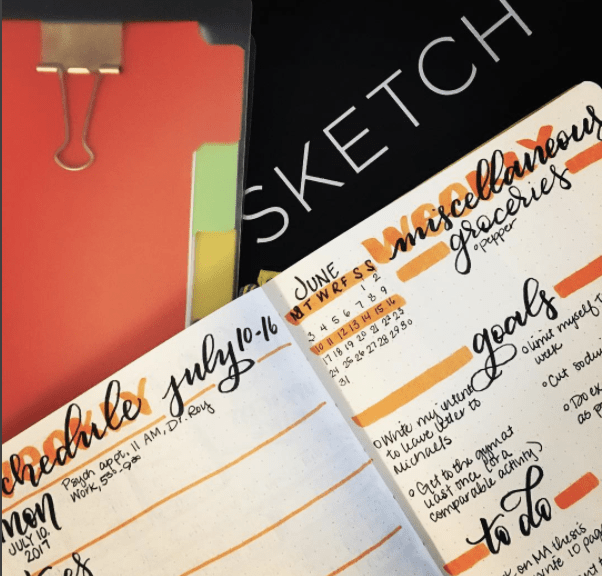
If you want to add some bolder black lines for headings, I highly recommend Pentel sign pens. They make great lines that don’t smudge and they’re also good if you’re interested in learning calligraphy or basic lettering to jazz up your notebook. (see example below)

Screen Shot 2017-07-17 at 11.58.56 AM

Tip: Don’t get too invested in making it beautiful. What you really need is something that is functional and practical for you. My journals are excessively pretty because it’s relaxing for me. I enjoy spicing up my otherwise dreary notes with color. Plus it helps me focus when I’m in class– it absolutely feels like it would be distracting, but the concentrating on what I want to write and how I want to write it, helps me absorb and retain information, and I’m more likely to be focused on the conversation, because I’m thinking about what I’ll add next.

LONG STORY SHORT…

Note taking is a lot about finding what works for you. I just happen to really enjoy the process of taking notes and have found my note taking strategies to be effective for me, and have been for quite some time.

Also, just because I prefer handwritten notes, doesn’t mean I always use them. For example, for articles or short excerpts of essays, I like to download them to NotesPlus and highlight important parts, do marginalia and write summaries on the document itself. This helps me keep track of all the articles I’ve ever read, since they’re all in one place without having to print out a bunch of loose pages.

I know plenty of people who swear by digital notes only, using Evernote or OneNote to keep track of the semester’s notes. Some people like having all of their notes digitally but prefer to hand write things, so an option is to get a notetaking app like NotesPlus for your device of choice and invest in a good stylus, and take handwritten notes on your device. Some people print all their articles, put them in a binder and sticky note the crap out of them.

Most people told me you’ll play around with a few different note taking techniques before you figure out what your preferred method is, saying that you definitely won’t take notes like you did before.

That may or may not be true.

I found that I take notes more or less the same way I did when I was undergrad, with a few adjustments, and that seems to have been working very well for me. Still, never be afraid to step out of your comfort zone and try new things. You’d be surprised to see what works!


I tried to keep the more confusing aspects of bullet journal designing out of this post, but if anyone’s interested in how I do that, leave comments below! Relatedly, if you’re interested in how to build a finals writing and reading schedule schedule, make sure you leave comments!

Intermission ft. “How to Ignore Bad Advice”

Greetings!

It’s been a while since I’ve written an update, because to be honest I’m doing the boring part now: writing.

After I visited the archive at the end of June, I spent a few weeks just sifting through the issues, reading and taking notes. It took a lot longer than I imagined– what I thought would be a solid two days of work turned into a week and a half of sifting, even when I was spending a few hours a day taking notes on issues. In my defense, the Fourth of July holiday popped up in the midst of all that, so I took necessary breaks to enjoy hot dog.

Finally, once I’d sifted as long as I could, I told myself it was time to just do it. The best advice I’d ever received and the best advice I’d ever given in grad school is to just start writing. You can only plan so much– at some point, you need to put the outline down, put down the notes, stop making excuses. The longer you put off beginning to write, waiting for the perfect set of sources, or reading one more book, the more frazzled you’re going to be. Just write. Work with what you have– you can always go back and add things later. Don’t expect the first go to be perfect– it won’t be. You’ll have to edit. Even if you write what you think is the world’s best essay, I guarantee, your advisor will still send you back three pages of edits to make.

It makes me feel better to know that even the authors published books and articles probably had pages and pages of suggested edits for their pieces, even after they were published. But at some point, just like forcing yourself to write, you’re going to have to force yourself to stop.

For me, and for a lot of people, getting the tap to turn on is the hard part. So to alleviate that, I just make myself write a little bit every day, even if it’s just a summary of a book I want to use, or a page of good notes on the issue that I want to work on– I just write so I have material to work with.

Then finally, one morning, I woke up at like 6 AM and my tap was on and all the ideas were flowing.

I wrote all morning and, at noon, collapsed gratefully on my bed.

Ever since, my Black Panther essay has been shooting out of me in bursts of about 2 or 3 single spaced pages at a time. I’m so grateful for this because I was getting worried about that piece: to this day, it’s the best idea I’ve come up with so I’ve been writing it and rewriting it for almost an entire year now. I turn my ideas over in seminar papers, blog posts, conference papers, and now, I’m attempting to consolidate everything I’ve been thinking about into a paper that, ideally, won’t be longer than 40 pages.

I’m currently up to 19/20 single spaced pages, but that includes a bibliography and images, and I haven’t even written two entire sections.

I’m going to have to edit the crap out of this essay.

With this amount of work and pressure on on my shoulders, I definitely need support and I’ll take it where I can get it but it’s also worth being able to identify good advice and throw out the bad.

GOOD ADVICE:

  • Visit an archive
  • Make sure you are well prepared for your visit
  • Write a little every day (or most days) so that it won’t get down to the last week and you’re writing in a unintelligible frenzy
  • Take breaks
  • Stay organized

GOOD SUPPORT:

  • Offer to go write with your friend
  • Commiserate during difficult moments and celebrate breakthroughs
  • Cheer them on! Positive vibes are always appreciated

BAD ADVICE:

(To be fair, everyone has different versions of what constitutes bad advice, but these are the worst comments you could offer in an attempt at helping, for me)

  • You’re going to need to cut X amount of material
  • Prepare for your thesis to not work the way you want it to
  • Expect the process to take exceptionally longer than you anticipate
  • Expect your advisor to be difficult

The thing about offering advice to people who are working on long written projects is that good advice is useful across the board, but bad advice tends to be based solely on negative experiences that one’s had while embarking on their own adventure. While it may not be entirely bad advice, it’s a little like telling someone that they should expect traffic in certain places on I95 when the other person is driving on 288– you can get to about the same place, but you’ll be using entirely different routes to get there, thus ensuring different problems.

It’s also not helpful to compare your journey to anyone else’s. For one thing, academia is based on a celebration of uniqueness– the idea is every project is unique. So, technically, there shouldn’t be an exact precedent for your situation. You can sort of gauge a possible path and set of likely occurrences, but ultimately, your project is one of a kind. You likely didn’t use the same type of sources as the next person, or you used a different type of method, or wrote in a different style. All of these things are factors that will contribute to a potentially extraordinarily different experience in working on your project.

So for the time being, I’m trying not to concentrate on how much I’m going to have to cut, but rather on just getting all of my ideas out onto the page. I’m not going to worry about my advisor because it’s my goal to do as much work as I can on my own before I have to get my advisor involved. I’m not going to worry about the length, but about making sure that I’m saying everything that I need to say.

There are so many potential problems I could focus on while I’m working on one of the most important projects of my young life– but instead I’m going to remember that this is a chance for me to say something really special, and that no one is going to be able to say it the way that I can.

It’ll work itself out.

I’m going to think positively about it.

I’ve gone through too much to let someone else’s experiences dictate how I think about and approach a problem.

I have enough negativity of my own– I’m not letting anyone else’s in.