
Category Archives: Ravynn: Act 4, Scene 1

Writing (and Defending) A Prospectus

In my Ph.D. program, after successfully completing your comprehensive exams, you then produce a prospectus. The prospectus is, in many ways, a speculative document. Think of it as a proposal for the dissertation: you are creating something that outlines the main research questions, the methodology, the existing literature, and your proposed intervention, while also giving your committee a sense of your timeline to completion. A prospectus is multi-faceted and multi-functional, thereby making it one of the most difficult genres of writing.

To start writing my prospectus, the first thing I did was check my handbook to see what the parameters and expectations were. These were the instructions given:

“The prospectus will give a full description of the inquiry to be undertaken. It will identify an issue or problem, explain how this bears upon or intervenes in a particular field of scholarship, relate the topic to previous and on-going works, detail the several parts of the project and show their interrelations, name the key primary sources, outline the principle methods, and suggest a timetable for completion. Such a prospectus should run between 3500 and 5000 words (approximately 14-20 pages) and should include as a supplement a bibliography of the principal primary and secondary sources.”


Next, I broke this up into sections that I knew I needed to answer:

  • Description of the inquiry
  • Identify an issue or problem
  • Explain how this intervenes in a field of scholarship
  • Relate the topic to previous or on-going works
  • Detail the parts of the project
  • Name the sources
  • Methodology
  • Timetable to completion

After I had the barebones structure, I reached out to a few trusted colleagues who were ahead of me in the same program, hoping to see their prospecti. I asked for and received about three prospecti to examine. Looking at their documents gave me a sense of how to structure my own.

Admittedly, I did something a little unconventional in terms of writing my first draft. The week after my oral comprehensive exam, I did a week long writing retreat sponsored by William & Mary Libraries, and spent five entire days just writing. I simply worked on drafting responses to each of the sections, and took advantage of being in the library to help build my bibliography and source material. By that Friday, I had a 20 page outline for what would eventually become my prospectus.

Following the retreat, with the exception of adding a section about the creative component I wanted to produce, I left it alone for almost the entire summer, coming back to it just before the start of the fall semester. Being able to leave it was a Godsend because I was able to reapproach my questions and methodology with fresh eyes and new ideas. I spent about two weeks stitching together my blocks of text, smoothing them out, connecting them more seamlessly until the document flowed as a cohesive unit.

Once I was happy with the way it read, I started to send it out to my chairs. Both offered substantive content and structural edits, which I took to heart and used to make my prospectus stronger.

After making the appropriate edits, I emailed the professors who would serve as my committee for my Prospectus Colloquium. In many programs, the defense of the prospectus is a much bigger deal than it is in mine. For some, one is not considered a candidate or “All But Dissertation” (ABD) until successful completion of the prospectus defense. In my program, we don’t even consider the colloquium “a defense;” it’s much more of a conversation about the project, a low key way to offer feedback that should propel you forward and help mold your path further.

Indeed, my colloquium was just that. Everyone was pleased with my proposed project, my methodology, my conversation with theorists, my proposed research and the creative component. They offered a few suggestions of note which would help me structure my chapters and overall narrative. Despite the project being “innovative” and “trail-blazing,” one of my chairs had very valid concerns about my work being legible in a way that would secure me a job.

I’m not sure I allayed her fears when I informed her that I’m not worried about being legible to older, white folks on search committees. My work is for Black girls that were and are like me. As long as I’m writing for them, I’m walking in my purpose and that is all I can ask for. Like I told my mother after the colloquium, I’m at a point where I’m no longer super concerned about landing a job in the Academy after I finish the Ph.D. I have so many skills and passions that something will turn up for me. That said, I have never been one who believed in simply waiting for things to fall in my lap. You must stay sharp and prepared so when opportunity comes knocking, you are ready. For me, that means getting my work out there in a variety of ways so that when the right opportunity comes, I can take it.

For the time being, I need to consider my next steps, which includes making an obnoxious, color-coded outline for my dissertation; pasting a timeline (also color-coded) to my bathroom mirror; creating a dissertation hashtag; and opening a new file in Scrivener. So that’s what I’m doing this weekend.

I’m ready to begin in earnest.


If you are a graduate student in American Studies or a related field, and need help formulating your prospectus, I am happy to send mine along. Just reach out via email or DM and say a little about who you are, what your project is and how you think seeing my prospectus could help you along.
A (Future) Black Professor’s Prayer | Toussaint Recap

Responsibility

This week’s episode of Black Enough, like the other two episodes, begins with a quotation from Ta-Nehisi that comes across like a prayer. One of the words that my mind clung to in the opening was responsibility. The words implore the viewer to think about the responsibility that Black boys (and Black girls) carry despite the impulse to be carefree. However, I was still mulling over responsibility when we cut to a classroom, where Professor Rekia is giving a rather compelling introductory lecture to a group of moderately engaged students, including Amaya. Jaheem’s late entrance only briefly interrupts the flow Rekia has going.

“We breathe in struggle, and exhale innovation.”

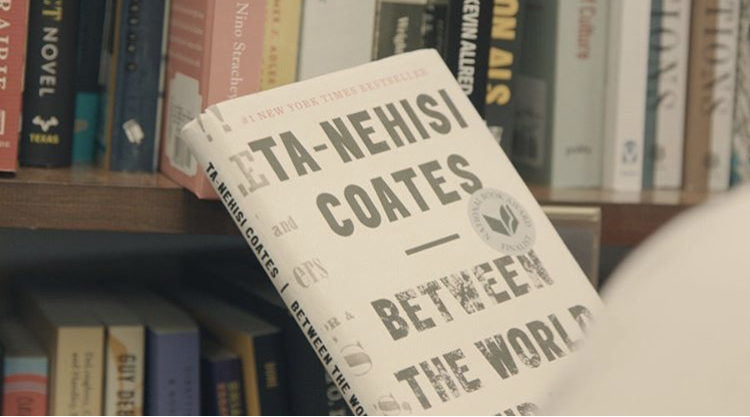
When Rekia has dismissed the class for the day, Amaya and Jaheem strike up casual conversation, that leads to them going on an adventure to find the bookstore together. They chat about the reading, the white girls from Amaya’s dance class, Chicago and the remnants of suburbia in Amaya’s hair. At the bookstore, both Amaya and Jaheem pick up copies of Ta-Nehisi Coates’ Between the World and Me, which Rekia quoted from in class.

“For the first time my eyes swayed across the page as the same pace as my hips…”

It feels only right that this episode ends with words from Dr. Stephanie Crumpton on her discussion of community based Black Girl Magic. The innovation of the professor, the teacher, reminds viewers how formative these figures are in our lives. Crumpton is spot on when she says that we do not make magic on our own; in my opinion, teachers have a very integral part in helping foster (or sometimes destroy) our magic.

Black women scholars are an integral part of this episode, and it had me wondering what it means to be a Black Professor. I often think about the legacies I am a part of, those which I uphold and those I work to change.

So from one (future) Black Professor to her someday students, here is my prayer:

I pray that I am able to care for myself. I will never be able to give you, my student, the breath out of my body. My breath is for me and God, so I pray I will be able to keep myself healthy and holy, so that I can share all that I can with you.

Know that I do this for you. I’m riding for you. I’m rooting for you. All of my struggle is for nothing if I can’t pass it on, if I can’t help to lift you up and encourage you to fly.

Which means that I jump through the hoops to put myself in the best possible position to help you.

And I write. Don’t forget that I write, but that’s for you, too. For my little sister with her nose in a book and dreams bigger than her Afro. For my brother searching for a way to make sense of the world. For my homie that needs to be heard.

I see you.

It is my dream to write about all the ways you will design to teach yourself to fly. I’m here to cultivate innovation, nourish creativity and to push you to think critically, carefully and closely.

But to be the best version of myself to carry out this purpose I read widely, reflect constantly and write fiercely because someone has to imagine a future for us, so why not me?

And everyday that you come to class, I hope you’ll realize why I have you learn the past. There is no future without looking back. We call it Sankofa, we call it Building on the Legacy.

This is the way God works through me.

And it’s worth it when I am able to open up my office door to the Black girl in my 11 AM lecture and assure her that her Black Girl Magic will level up to Black Woman Sorcery, knowing all the while God was preparing me to be a testimony.

This is the way God works through me.


Further Reading:

Between the World and Me, Ta-Nehisi Coates

For Colored Girls Who Have Considered Suicide When the Rainbow Is Enuf, Ntozake Shange

Becoming Full Professor While Black,” Marlene L. Daut

Creating and Maintaining My Wellness Routine

At the beginning of the semester I wrote a post about rediscovering my wellness, detailing my not so great habits that led to a sedentary lifestyle, my descent into poor eating decisions, and what I intended to do about it. Six weeks after committing to some of the changes I laid out in the same post, it’s time to do a wellness check in.

When I added yoga classes to my semester timetable, I was unsure how this would all play out. I had no idea that after just a few classes I would have the Yoga Bug. Six weeks and nearly twenty classes later, it feels weird not to do a few poses even if I don’t have a class scheduled for that day. One of my new favorite things is showing off my new poses to my parents, who are increasingly shocked at how difficult some of them look. As a result of my 3-4 times a week practice schedule, I look and feel stronger, my mood is stable, and I’m proud of my diligent work ethic.

If I could recommend yoga to everyone, I would. My current practice includes Yin yoga one hour per week and two Vinyasa classes. I also took a four week “Intro to Yoga” mini series, where I got to practice foundations and learn modifications to poses that help me feel more confident practicing in class settings. However, there are lots of things that don’t necessarily make yoga classes accessible or comfortable for everyone. Classes are free for me as a student on a campus, but not everyone has that luxury. Stereotypes about yoga are stereotypes for a reason: classes typically are filled with thin white girls, which often makes me feel hyper visible and acutely aware that I cannot wrap my arm around my big thigh to come into Bird of Paradise like everyone else can. And, truthfully, who really has the time to go to classes?

Of course, there’s always the option to do YouTube yoga classes or find studios that cater towards folks of color, if you’re in an environment where that sort of thing might be possible, but there are so many limitations. In terms of finding time for wellness practices, I do have actual suggestions. Sitting down at the beginning of the semester to block out my regular obligations on paper helped me see how much time I truly had to do my own thing. I started with blocking out time I knew I had to devote to TA’ing: I blocked out lectures, discussion sections, meeting times, and office hours. From there I added regular meetings and appointments. Then I was left with a lot of space. I saw where I could insert an hour practice here and another there. Once I was satisfied, then I added regular dissertation work time. I think for the average PhD student, we tend to work around our writing, but I realized that if I was going to commit to my wellness, my priorities had to shift. Writing would fit into my predetermined schedule, rather than be a monster that took up all of my time like an inescapable dark void.

To be sure, I have made other changes as well. Really, it’s making decisions every day that lead up to a lifestyle change. I have been working on developing boundaries between my work life and my home life, which means that if I can help it, grading stays in my office. Do I always honor that? Absolutely not, but I try. I limit my consumption of fast food and do small, weekly grocery hauls so that I always have fresh and good things to eat at the house, even if I don’t feel like cooking. I also rejoined the Mindfulness Meditation group that I was a part of last year to encourage regular meditation practice.

It’s worth remembering that even though I was shaken into a recognition that I was failing myself and my own health, these are the things I needed to do for myself anyway. Yes, I am an overworked graduate student and that by itself comes with a load of stressors that wellness practices can help, but I also live with Bipolar II disorder. Managing moods has always been…a task. I often walk through the world as if a fog has settled right over my face and I can’t see beyond the joy or sadness, whichever, or whatever, is present in that moment. It’s super cliché, but when doctors tell you moving and exercise will help your mood, it actually will. I’ll be perfectly honest, I never wanted to do that. I hate exercise. But between yoga, being properly medicated, and eating better foods, I’ve never felt more clear-headed.

While I’ve spent most of this post being a walking advertisement for yoga, I do want to acknowledge the fact that it’s really difficult for some people to enjoy for a whole host of very valid reasons. And beyond that, finding a good yoga studio, teacher, and specific practice can be very much like finding a good therapist. Some teachers’ methods of practicing will really resonate with you, and others will turn you off. You have to be willing to try a few varieties to know what you enjoy doing: you may love the fast movement Vinyasa but find Restorative Yoga entirely too slow. And you might like a teacher and their class, but the studio might not feel welcoming. All of that is okay.

What’s most important is developing your wellness toolkit. Right now, mine includes yoga, good eating, meditation, journaling, art and warm comfort drinks, but do know that you should regularly attend to your wellness toolkit. Think of them as seasonal. Things that work for you right now, may not work for you in six months. Update as needed. Do things that help you keep in tune with what your body needs from you. It’s hard, but let me tell you, it’s well worth the effort.